
Deep space
Spiral Cluster
Open cluster · M34 · NGC 1039
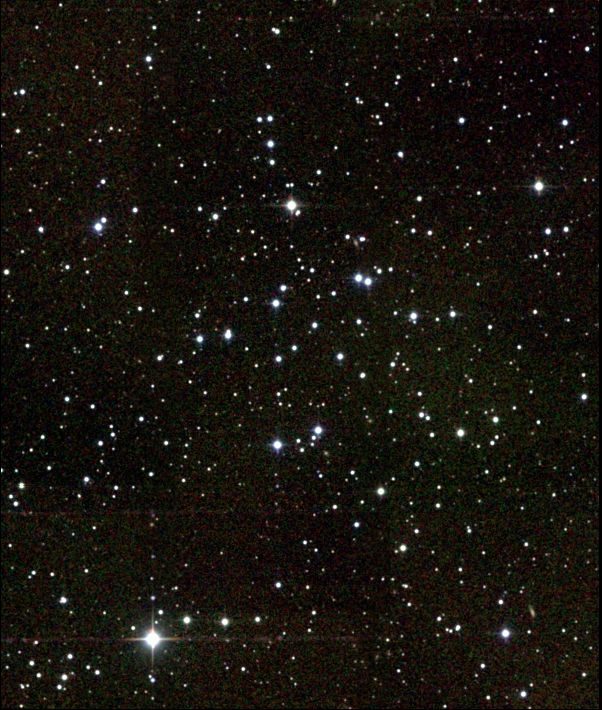
Open cluster in Perseus
Photo: Atlas Image [or Atlas Image mosaic] courtesy of 2MASS/UMass/IPAC-Caltech/NASA/NSF. · Public domain · Wikimedia Commons
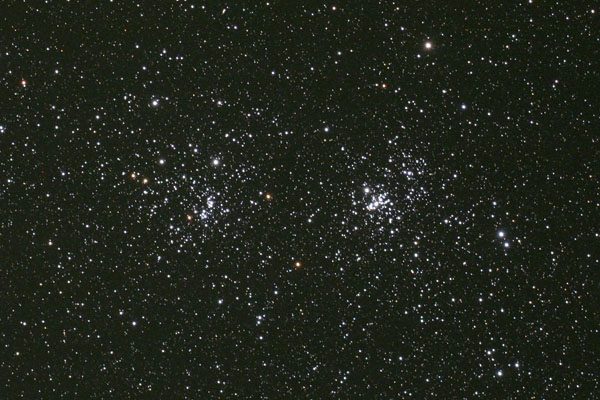
Messier 34 is a large and relatively near open cluster in Perseus. It was probably discovered by Giovanni Batista Hodierna before 1654 and included by Charles Messier in his catalog of comet-like objects in 1764. Messier described it as, "A cluster of small stars a little below the parallel of γ (Andromedae). In an ordinary telescope of 3 feet one can distinguish the stars."
Description from Wikipedia (CC BY-SA 4.0).
In your sky
Share your location to see where this is in your sky right now.
Key facts
Distance
~1,500 light-years
Apparent mag.
+5.5
Apparent size
35′
Best seen with
Naked eye (dark sky)
Catalogue
M34 · NGC 1039
Did you know
- Listed as Messier 34 in the Messier catalogue, also known as NGC 1039.
- Found in the constellation Perseus.
- Visible to the naked eye from a dark, moonless site.